


As the latest federal budget jumps through its final hoop, becoming law in March, cities throughout the country are looking towards their own budgets, albeit likely in a more sombre mood. Even the most casual observer is aware that, coast to coast to coast, our cities are struggling financially, especially when it comes to the maintenance of critical municipal infrastructure.
The City of Toronto’s infrastructure deficit alone, the additional money needed in the next ten years to maintain its existing infrastructure, is $26 billion. Calgary’s is approaching $8 billion. And Winnipeg would need to effectively double its property taxes in order to close its infrastructure gap. Even the most conservative estimate out there pegs the total municipal infrastructure deficit in Canada at $270 billion. Some, like the International Institute for Sustainable Development, have said it may even be as high as $1 trillion.
It’s why municipalities have been calling for years for more funding from their provincial and federal counterparts. Clearly, cities don’t have enough money to do it alone. Luckily, the most recent federal budget seems to have heeded that call, with a new commitment to funding “generational” investments in municipal infrastructure. The amount? $51 billion over the next decade. And all of it borrowed.
That should serve as a brutal reality check.
Let’s spell it out: the federal government is borrowing a generational amount of money to invest in local infrastructure, and it amounts to only 5-18% of what’s needed to maintain what we already own. And that’s before we consider that a lot of it will be devoted to building new infrastructure, not maintaining existing facilities, effectively adding to infrastructure deficits over time. Because everything needs maintenance eventually.
Cities should recognize this moment for what it is: the realization that no one is coming to save them. Because whether the necessary money is collected via property tax, income tax, sales tax or user fee, and whether by the city, the province or the feds, the fact remains that there is only one taxpayer at the end of it all. The problem was never that cities didn’t have enough money for their infrastructure, it was that we, the ones who fund them, don’t have enough. We cannot afford the cities we’ve built.
So what now?
At this point it’s natural to feel any number of emotions: sadness, denial, anger, bargaining. After all, when hope dies, it’s normal to grieve. But the cities that will fare the best in the future are those who most quickly move to the final stage of grief: acceptance.
The cold, hard financial reality facing our cities is that they will own less infrastructure tomorrow than they do today. The only question is whether it happens in an orderly fashion where they’re in control, or in eventual catastrophic failures.
And there’s no shortage of examples that it’s happening already: sudden massive watermain breaks in Calgary and Montreal, sewer spills and emergency bridge closures in Winnipeg, and sinkholes in Ottawa, Toronto and Saskatoon. And that’s just the big stuff. No matter where you live, your neighbourhood rec centre, pool, arena or library is likely also a poster child for lack of maintenance.
But if infrastructure is an investment in economic growth, can’t we just grow our way out of this?
Unfortunately, infrastructure investment isn’t magic. Like all investments, infrastructure investments can be good investments or bad investments. And if the ones we’ve made in the past haven’t returned enough to even pay their own maintenance bills, then those are bad investments. When you lose money on every transaction, you don’t make it up with volume.
Since 80% to 90% of all municipal infrastructure is just the roads and pipes, successful cities will be those who squeeze higher returns out of those existing investments, adding more tax base while actively reducing the size of that existing infrastructure base in an orderly, planned fashion. Those that don’t will face catastrophic infrastructure failure in our lifetime.
If that sounds like the future is infill, walkable neighbourhoods, bikes and transit, it’s because it is. City building isn’t about ideology. It’s about money. The math on that is merciless.
Michel Durand-Woodis a public speaker, municipal finance educator and the author of You’ll Pay for This: How we can afford a great city for everyone, forever.
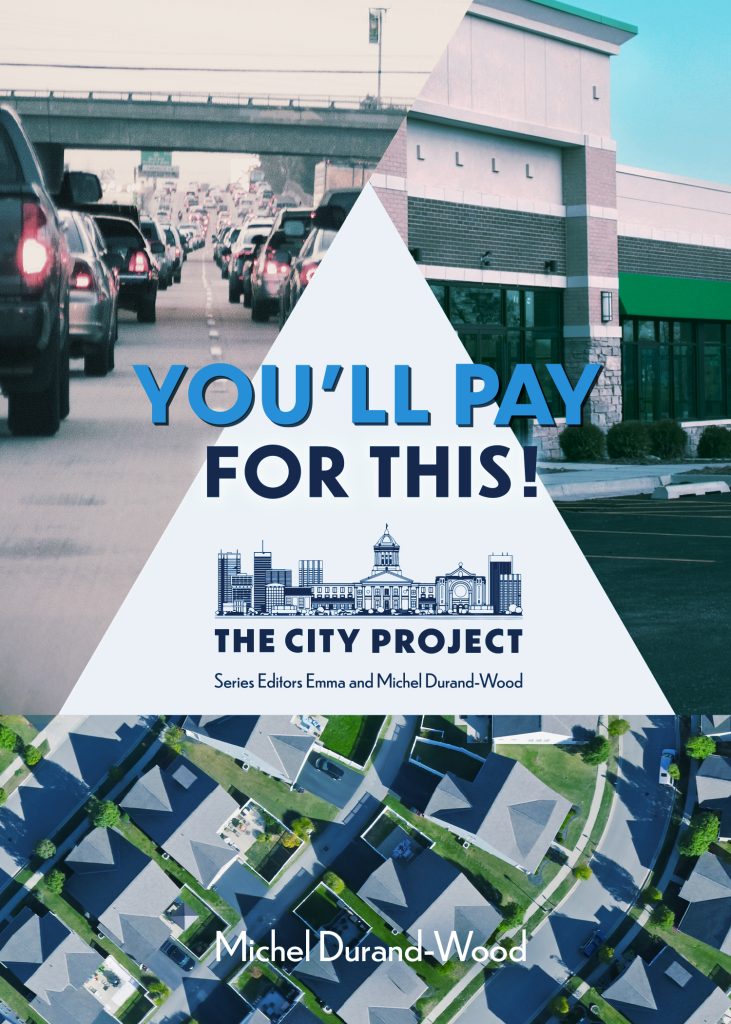
May marks the one-year anniversary of The City Project series launch! The City Project’s imagines what a happier, healthier, more just and more sustainable city could look like—and how we get there.
 Excellent news for our first 2016 Monday: